UX Research · Human Centered Design · Print Design
A Daily Guide to Feeling Less Alone
ROLE
Researcher & Designer
TIMELINE
Dec 2025 (4 weeks)
TOOLS
Figma, Google Forms, Risograph Printer
TEAM
Scarlett Wang, Hyewon Hong, Alexandra Kosloski
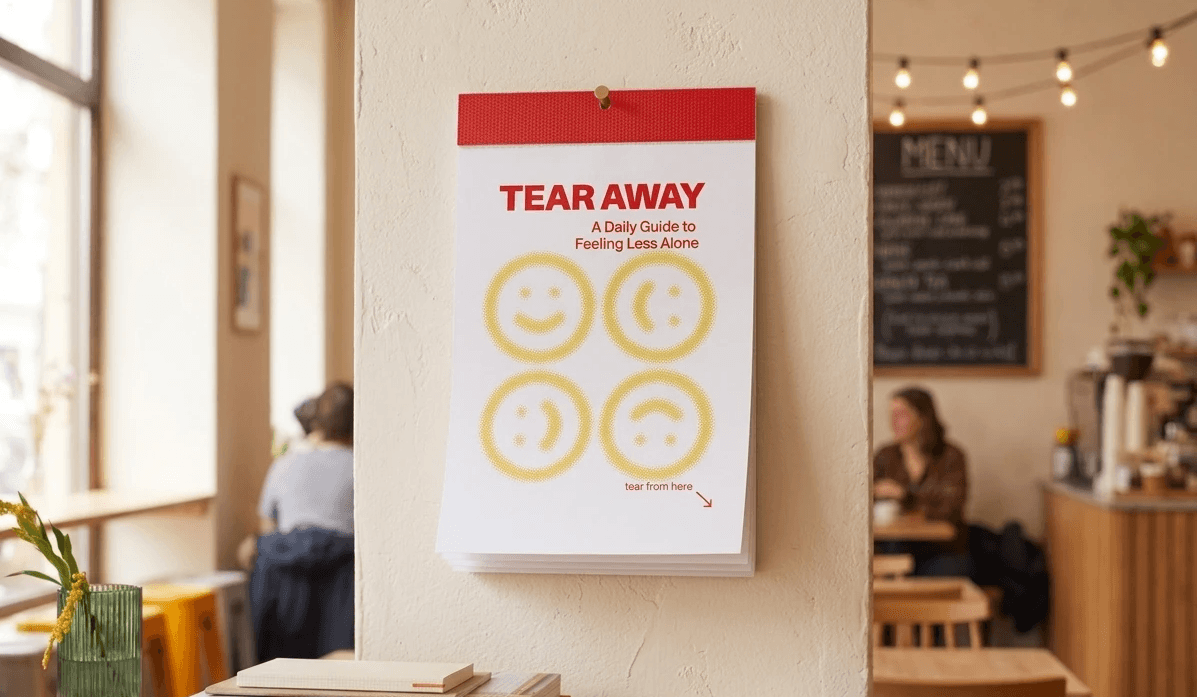
How might we design an accessible and structured tool to help young adults navigate loneliness & negative emotions?

01
THE CHALLENGE
☹
Young adults navigating post-grad life in big cities often struggle with loneliness due to weakened social connections and lack of community, which negatively impacts their emotional wellbeing.
We focused on the emotional wellbeing of young adults (22–27) navigating life transitions in urban environments - a group losing the built-in social structures of university life. Loneliness here isn't physical isolation - it's emotional disconnection: feeling invisible, misunderstood, or out of sync. When well-being dips, self-blame and withdrawal create a self-reinforcing spiral.
02
RESEARCH
secondary research
We started by reviewing academic papers on loneliness, well-being, and coping mechanisms. Three findings shaped our direction:
1
Loneliness in young adults is driven by internal processes — rumination, self-blame, negative past orientation — more than physical isolation.
2
The quality of social connection matters far more than the quantity.
3
Effective coping means solution-focused action and positive reframing — not simply spending more time with people.
PRIMARY RESEARCH
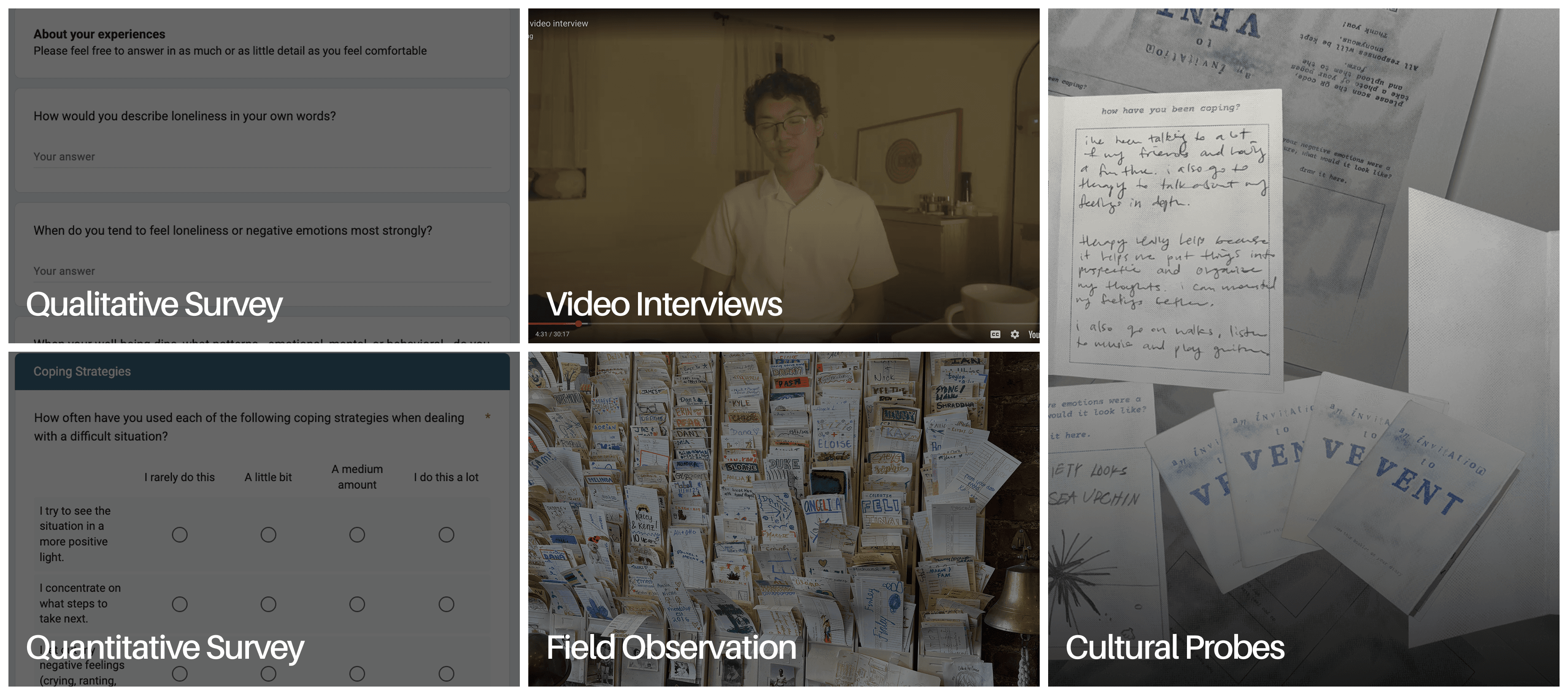
We narrowed our focus to recent graduates aged 22–27: navigating adult life for the first time, losing the built-in social structures of university, and a group we knew firsthand. We designed a series of mixed-method, quantitative and qualitative studies to better understand their experience.
03
FINDINGS
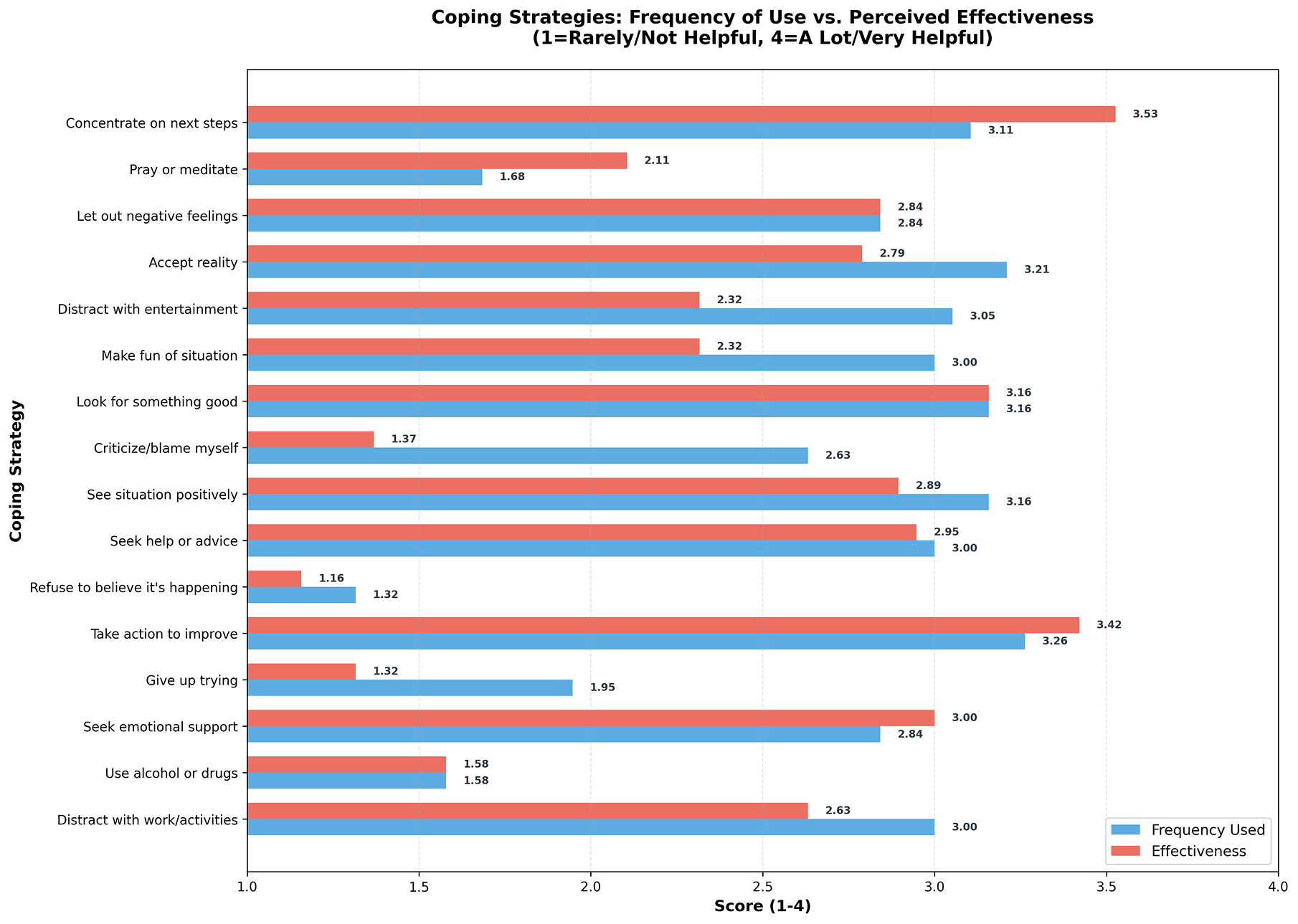
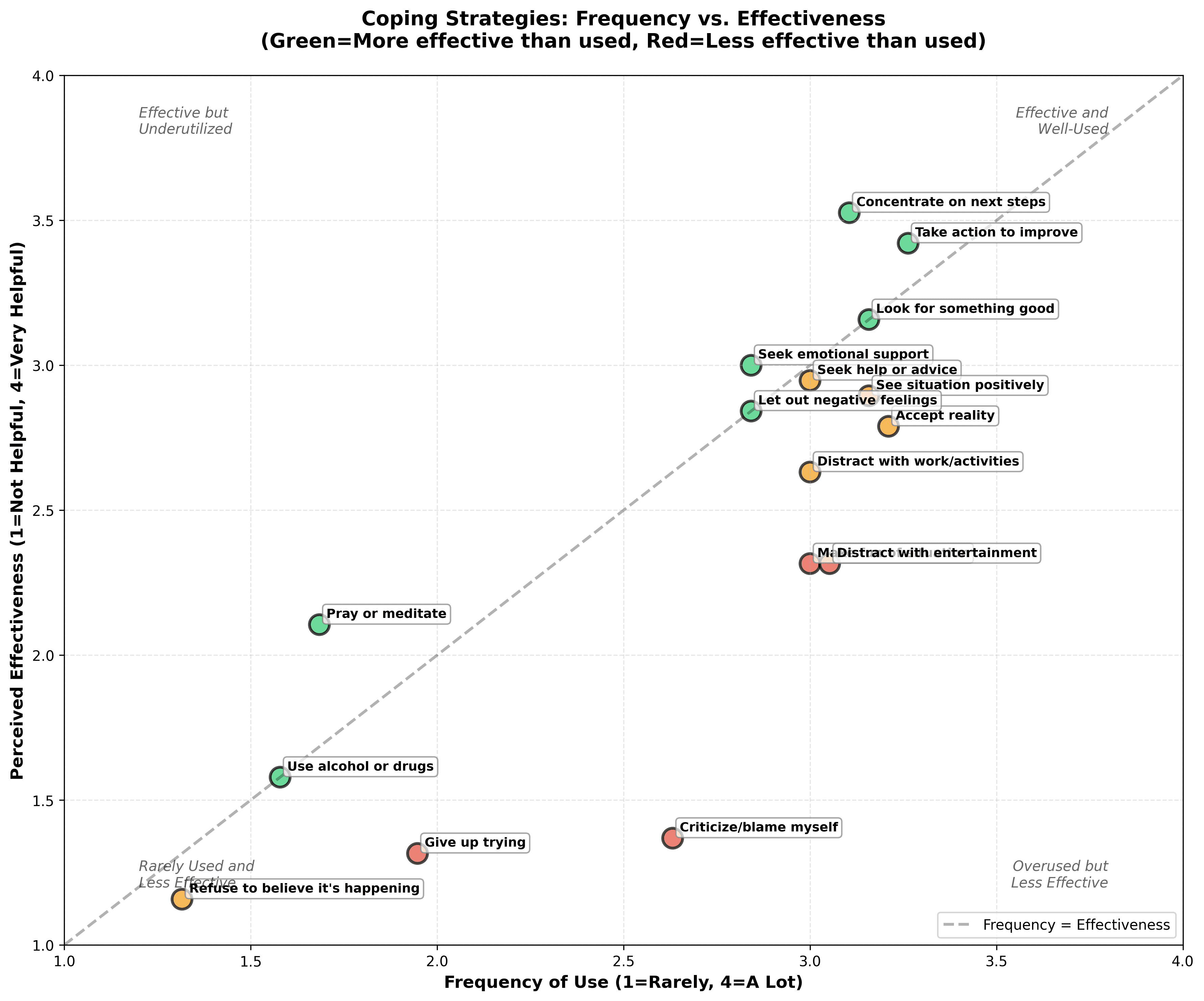
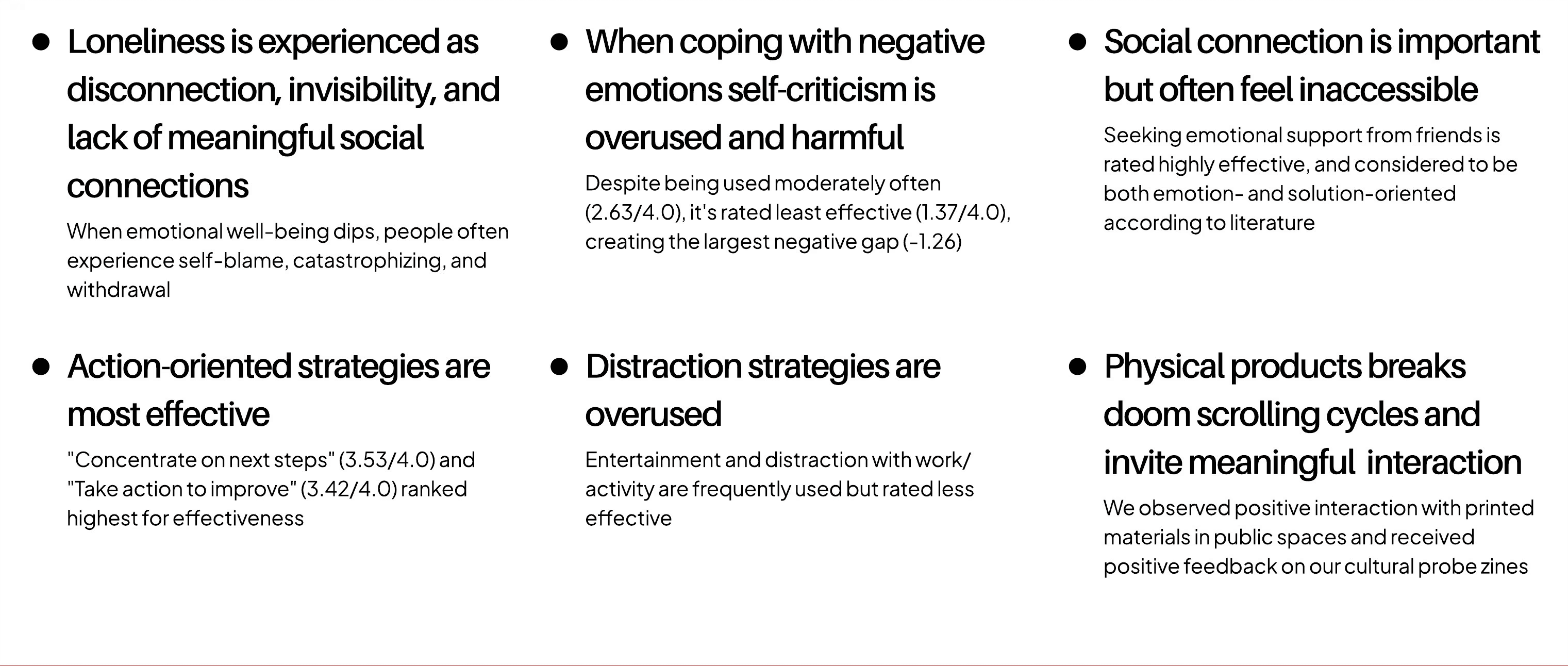
Results from our survey of 21 participants were consistent with our literature review and revealed a significant gap between knowing effective coping strategies and actually using them.
05
IDEATION
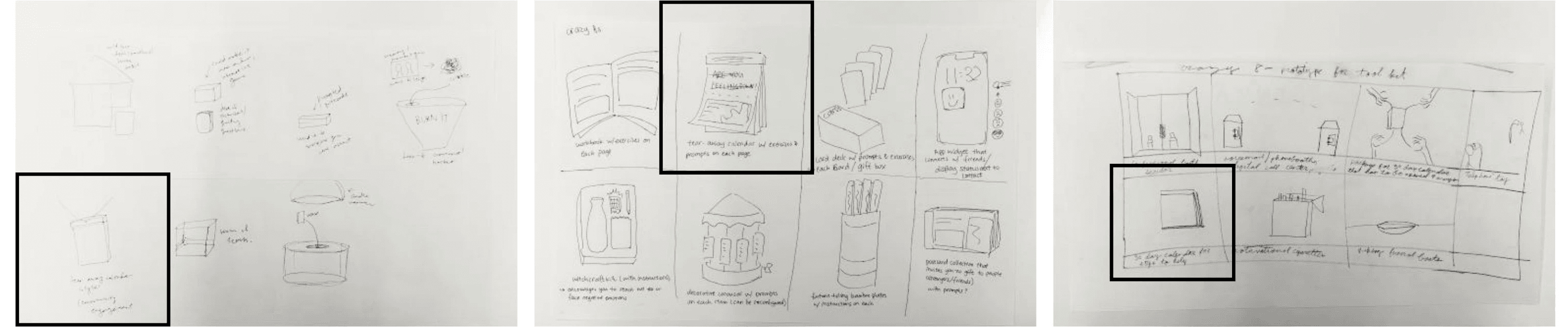
Storyboards and Crazy 8s — each team member explored different forms before converging on a tear-away booklet inspired by daily desk calendars.
What
A 30-day tear-away workbook of actionable daily exercises grounded in our most effective coping strategies.
One page per day — no skipping ahead
Physical, screen-free, low barrier to start
How
Encourage social outreach, active solutions & positive reframing
Discourage self-blame, distraction & unhealthy isolation
06
DESIGNING THE PROMPTS
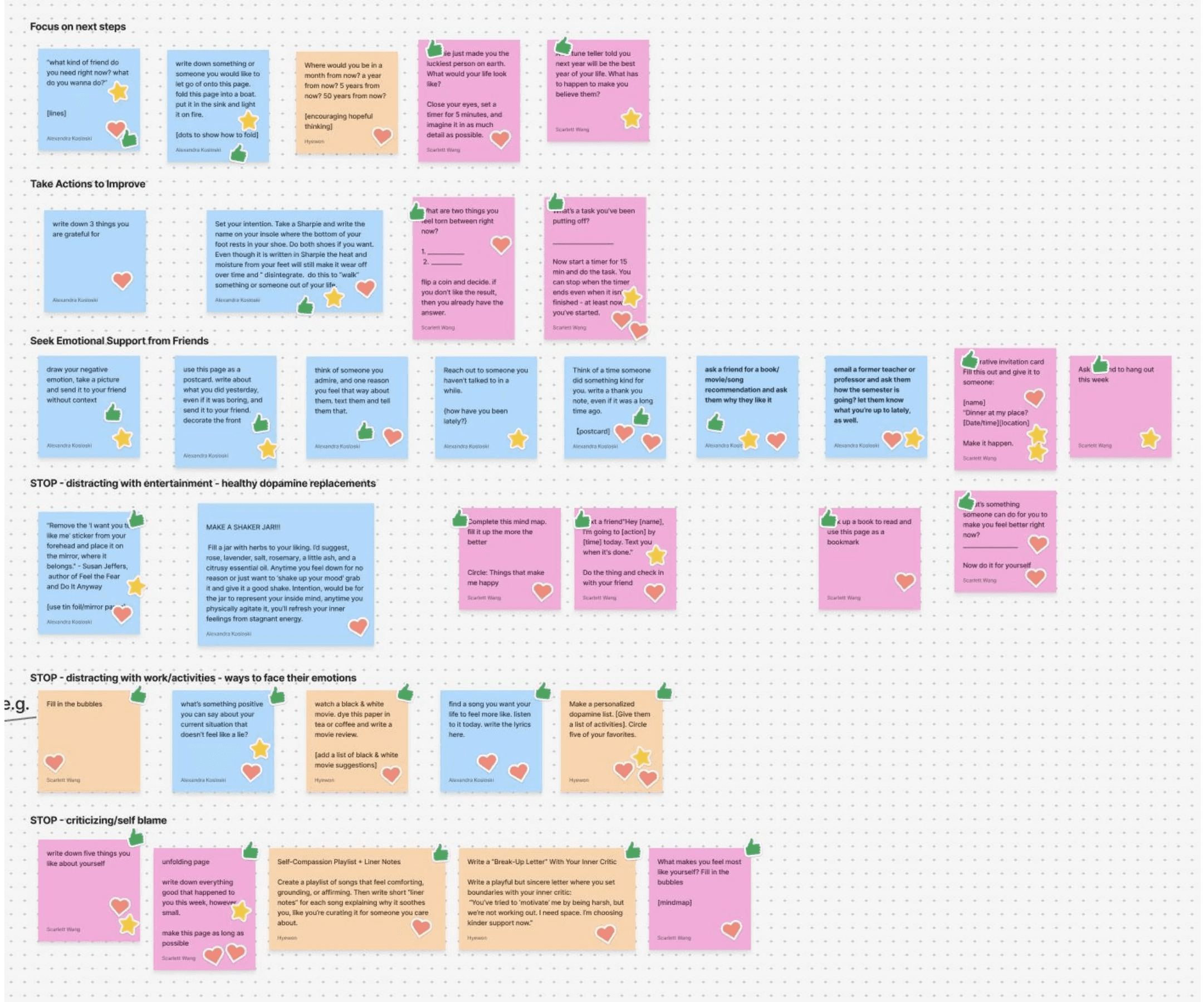
We brainstormed a large pool of prompts and selected the best 30 for each day of the month, organized around six research-backed strategy categories. We focused our design toward the most effective strategies, and against the most overused harmful ones.
01
Focus on Next Steps
02
Take Action to Improve
03
Seek Emotional Support
04
Healthy Dopamine Replacements
05
Ways to Face Emotions
06
STOP Self-Criticizing
07
PROTOTYPING
We brainstormed a large pool of prompts and selected our favorite 30 , organized around six research-backed strategy categories. We focused our design toward the most effective strategies, and against the most overused harmful ones.
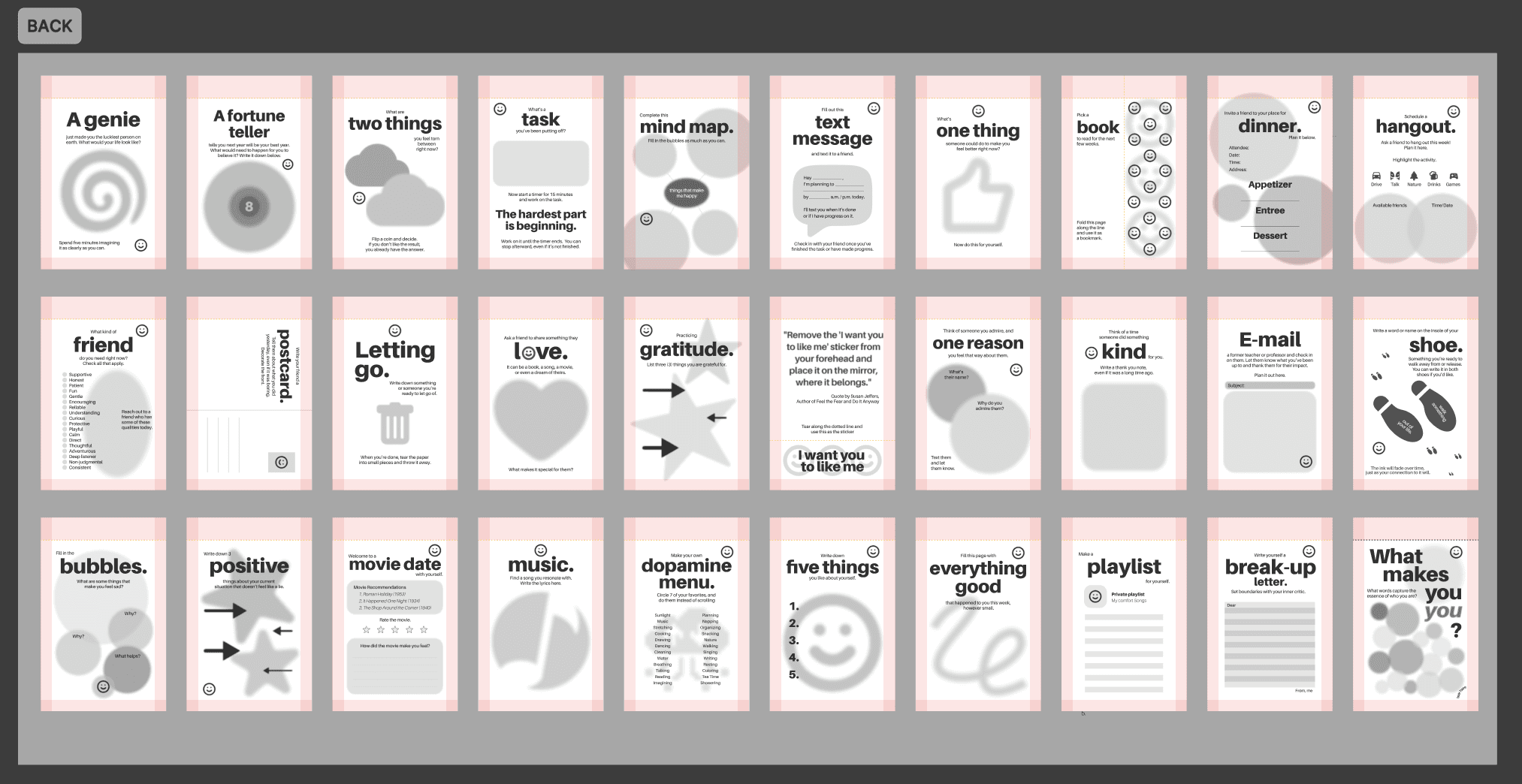
Page Design V.1
Each team member designed 10 cards individually to compare visual directions. Riso-printed in blue — which we quickly found felt too cold and clinical. We scrapped the palette and moved to red + yellow.
Binding Exploration
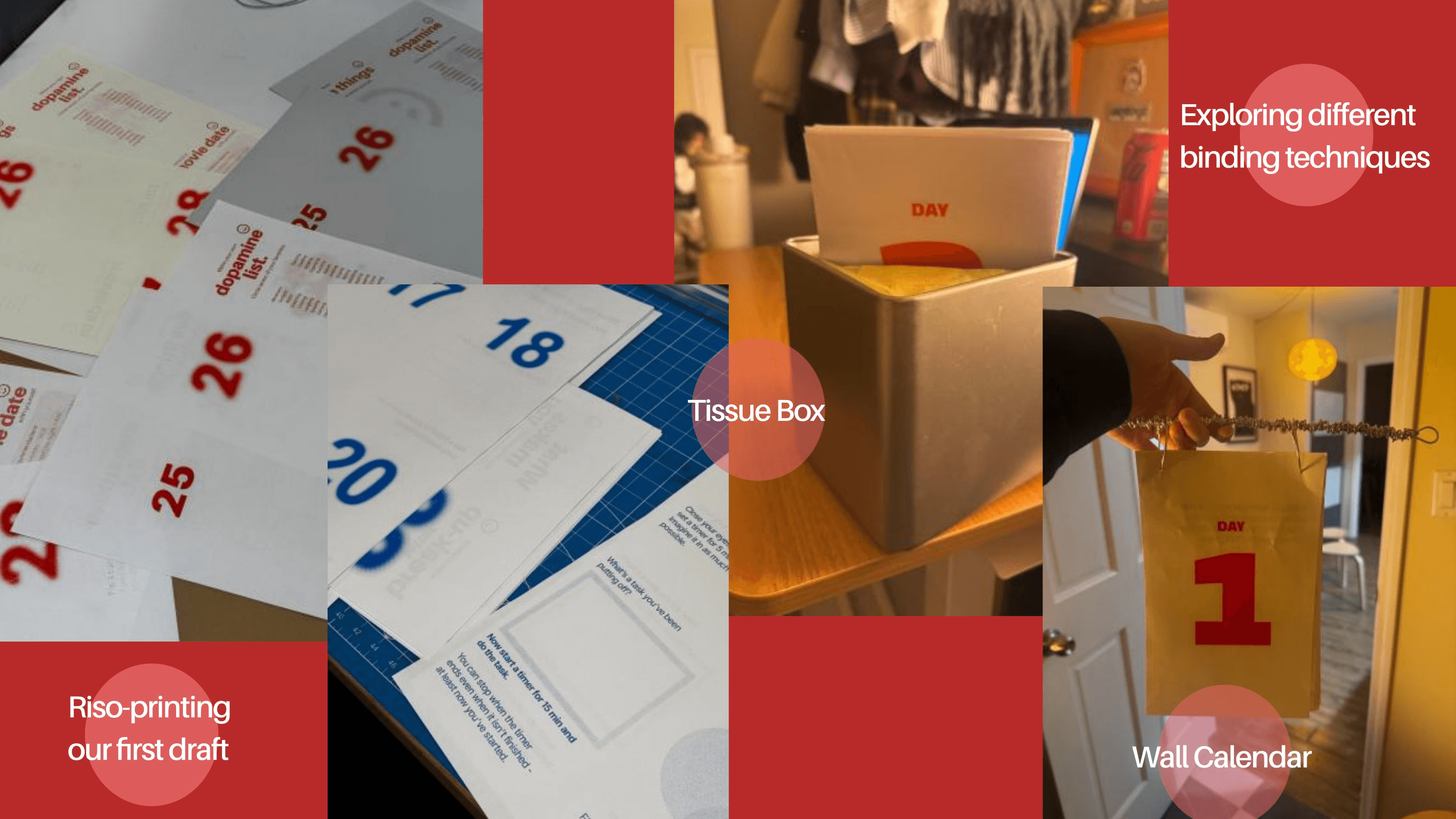
We tested various binding formats: binder clips (too loose), staples alone (tore unevenly), wire rings (didn't invite tearing clearly), tissue box, and wall calendar formats. A combination of staples, cardboard backing, and red tape proved the most reliable — clean tearing, sturdy hold.
User Testing Feedback
Clarity of Prompts
Rewrote ambiguous cards to be direct and immediately actionable — no interpretation required.
Complexity of Activity
Simplified complex prompts so nothing required more effort than a bad day could afford.
08
FINAL DESIGN
Paper
Thick postcard-weight stock — durable for daily tearing
No transparency keeps the next card hidden, adding daily novelty
Binding
Tear-away calendar format — daily rhythm is structural, not aspirational
Red tape top bind references notepads: ideas, drafts, beginnings
Color
Red + yellow as a sunrise palette — daily renewal, warm activation
Rejects muted wellness aesthetics; signals emotional health is urgent
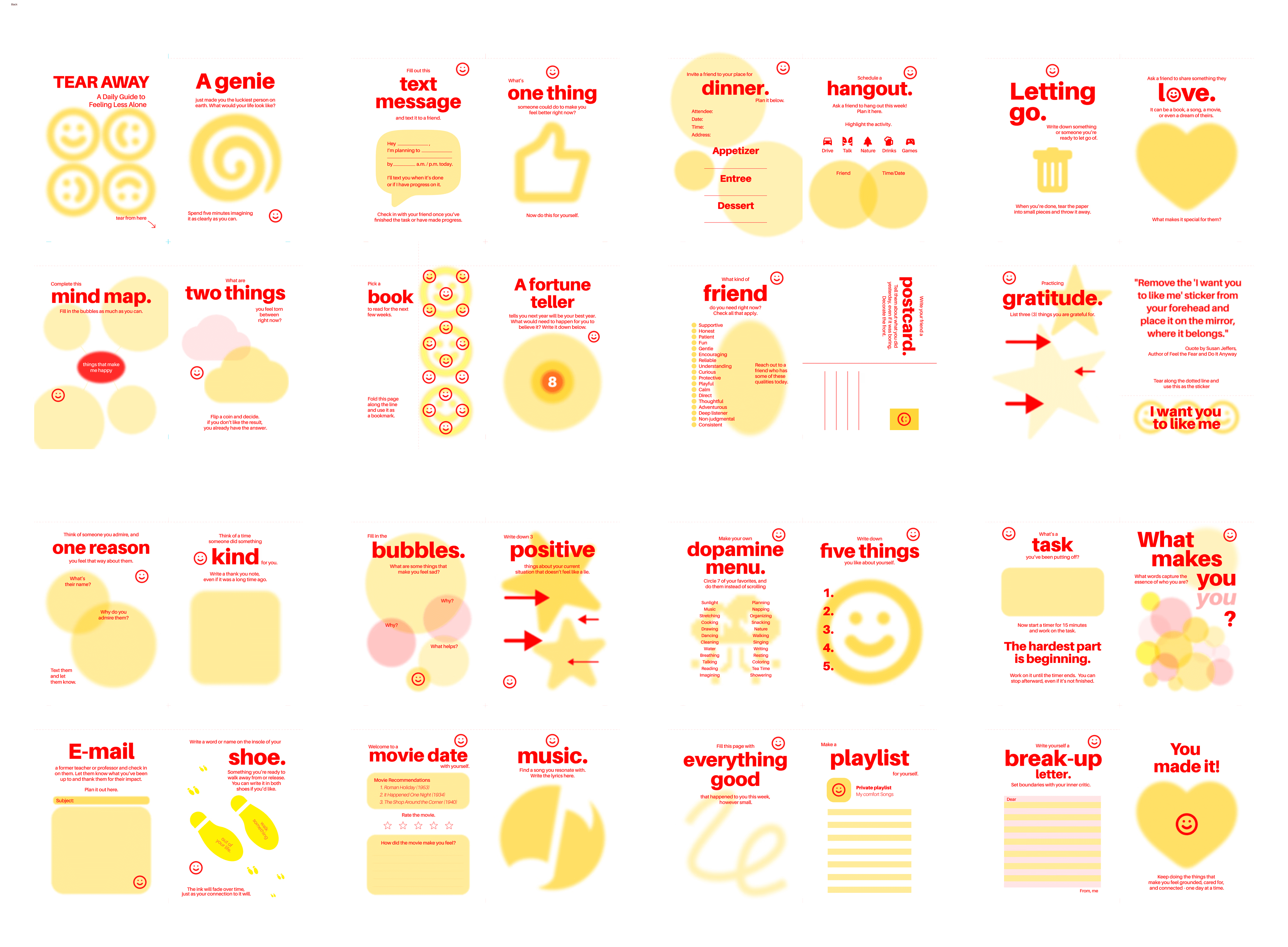
All 30 cards — each given a unique visual treatment. Different prompts, different energy.
09
TAKEAWAY
Things We'd Do Differently
1
Test in community settings. We designed for cafés, bookstores, and laundromats — but never installed the product there. Stranger interactions would change the design.
2
Develop a scalable production process. Binding at scale exposed how much we didn't know about physical production. We'd invest in that infrastructure earlier.
Things We'll Carry Forward
1
Research shapes behavior, not just content. Our coping data told us how hard each prompt was allowed to be — activation energy constraints came from the research, not intuition.
2
Tone is a clinical decision. Choosing bold red over soft blue, "VENT" over "reflect," smileys over abstract icons — all attempts to remove the shame barrier from emotional self-care.